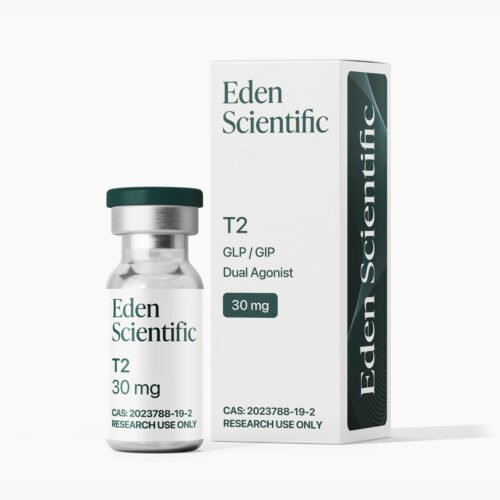
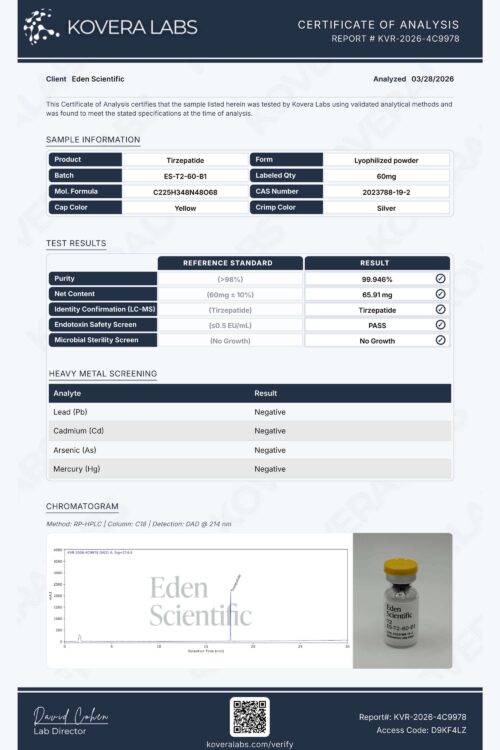
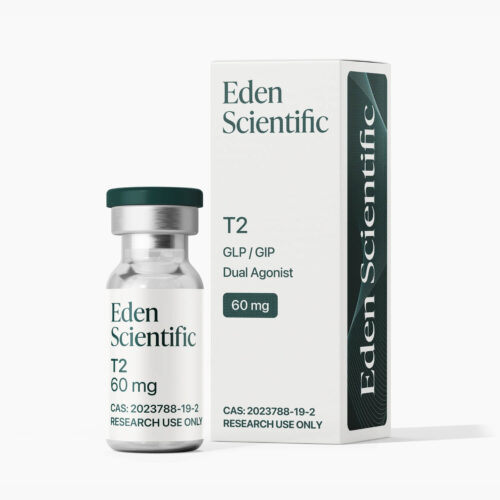
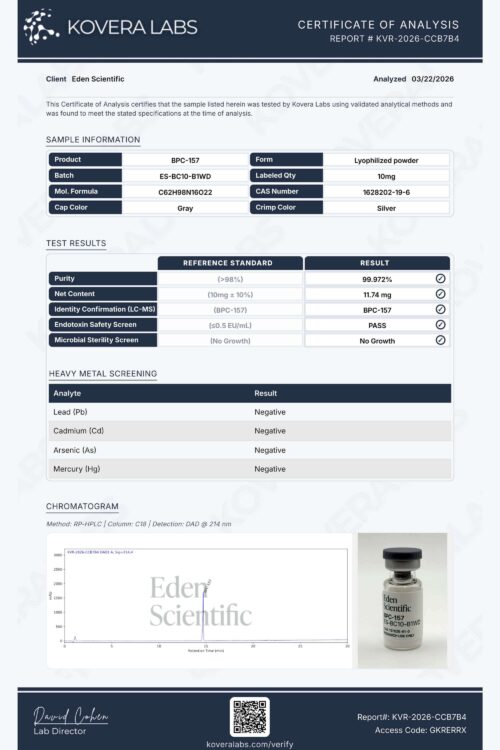
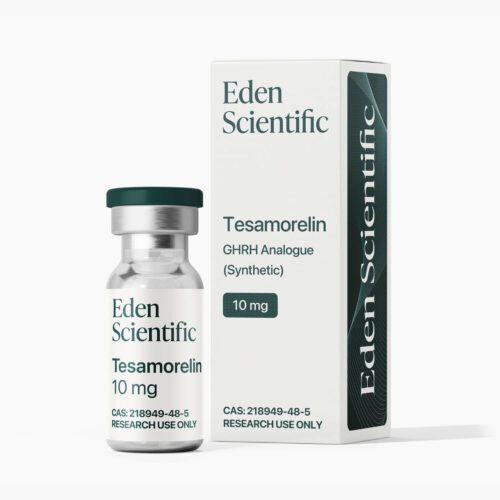
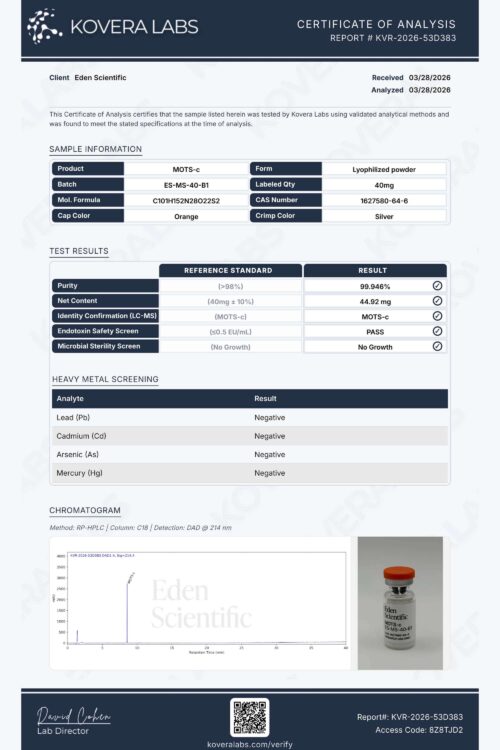
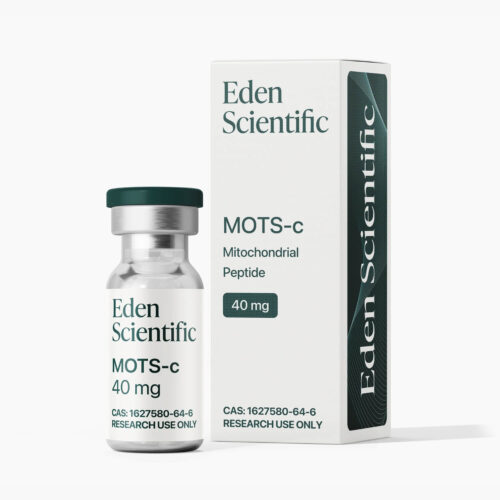
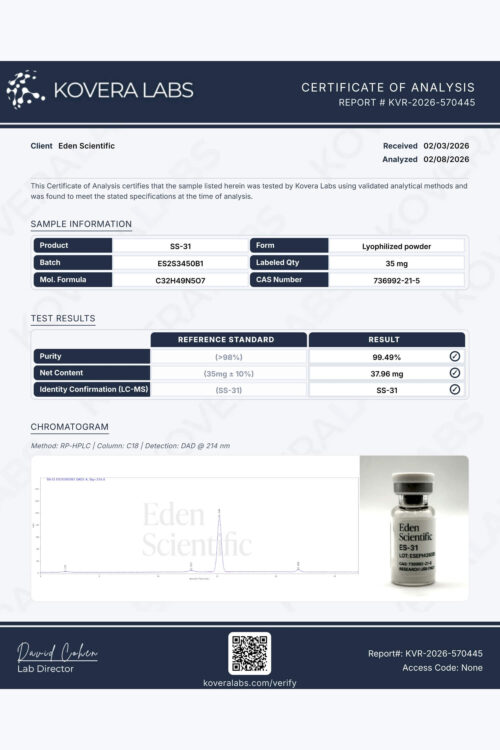
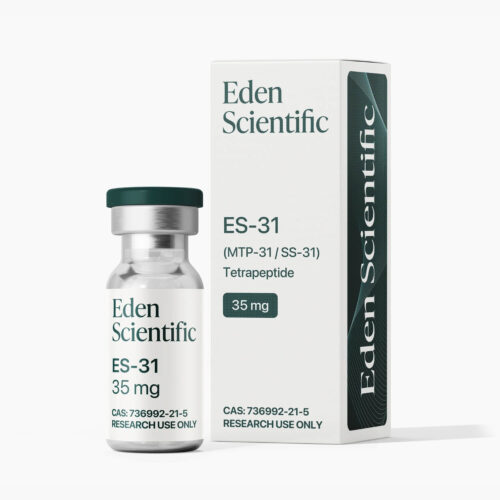
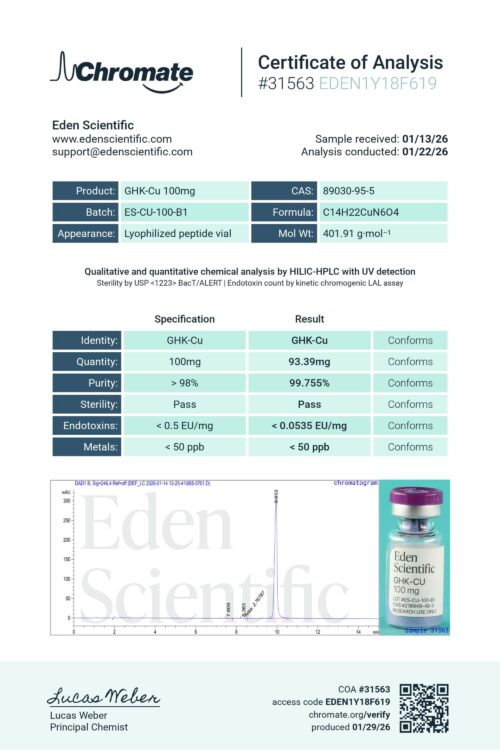
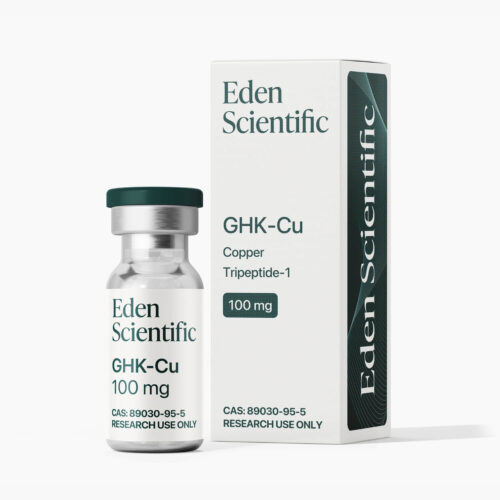
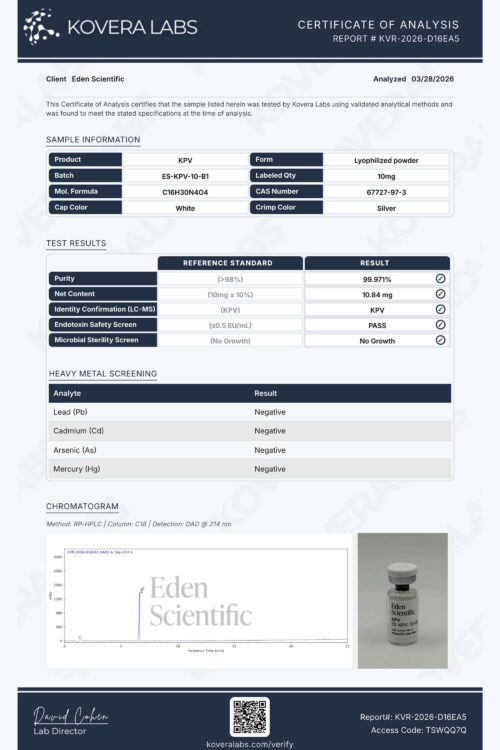
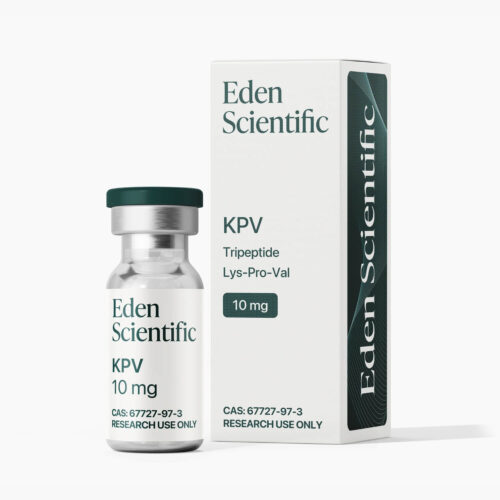
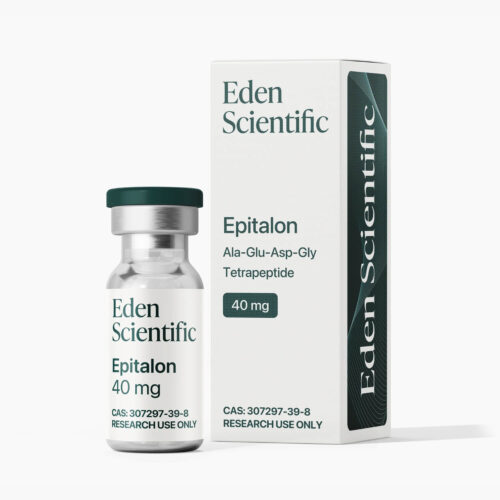
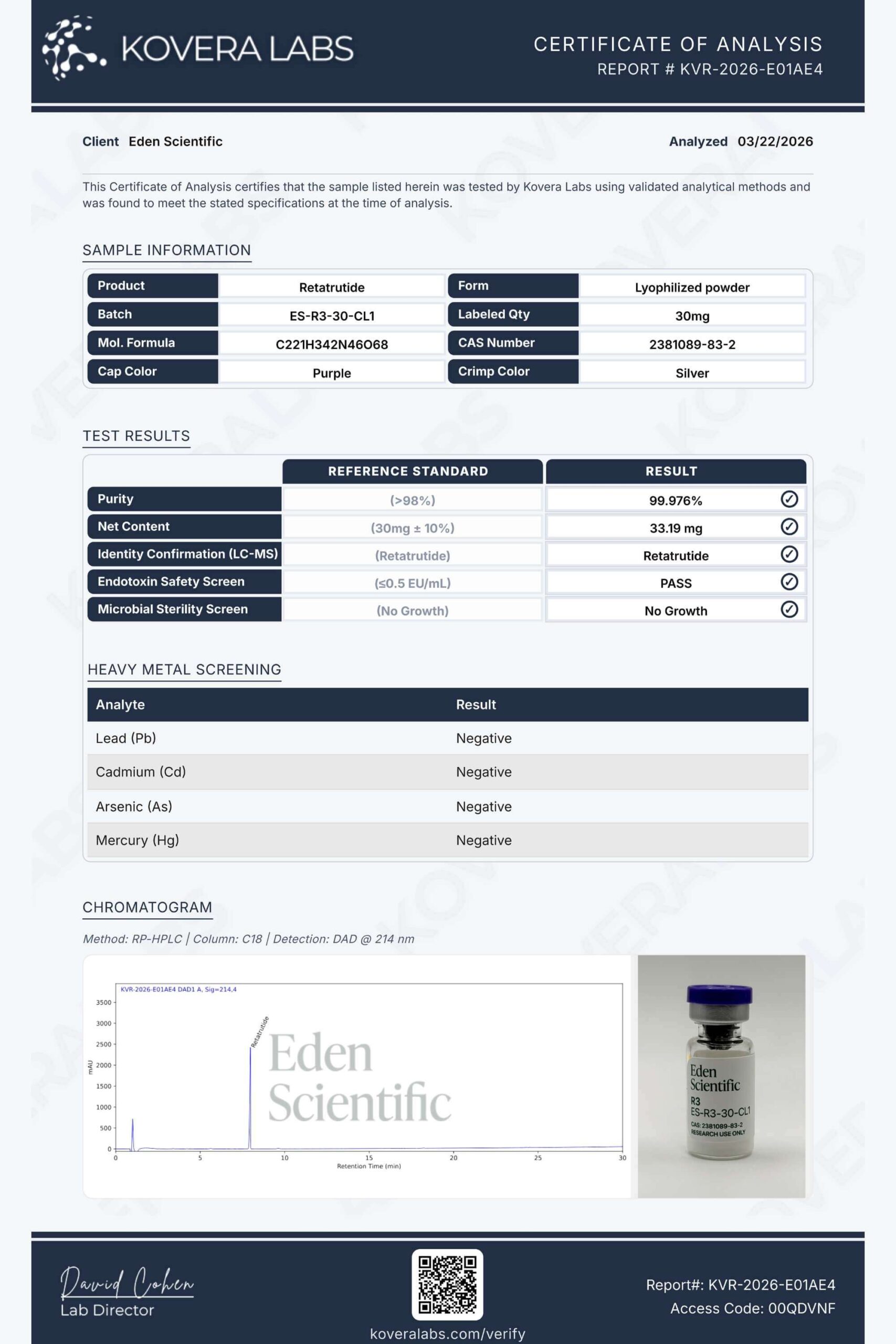
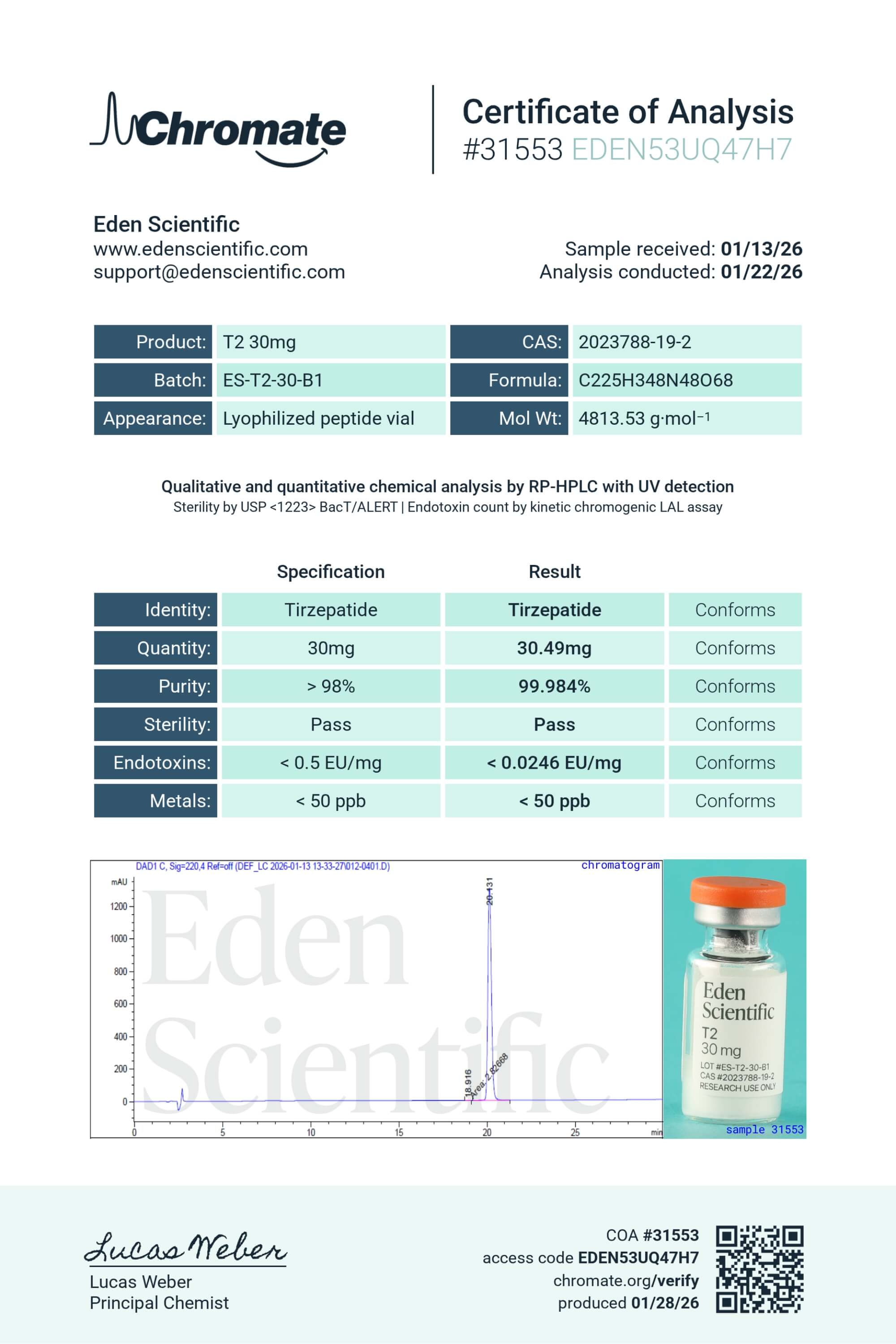
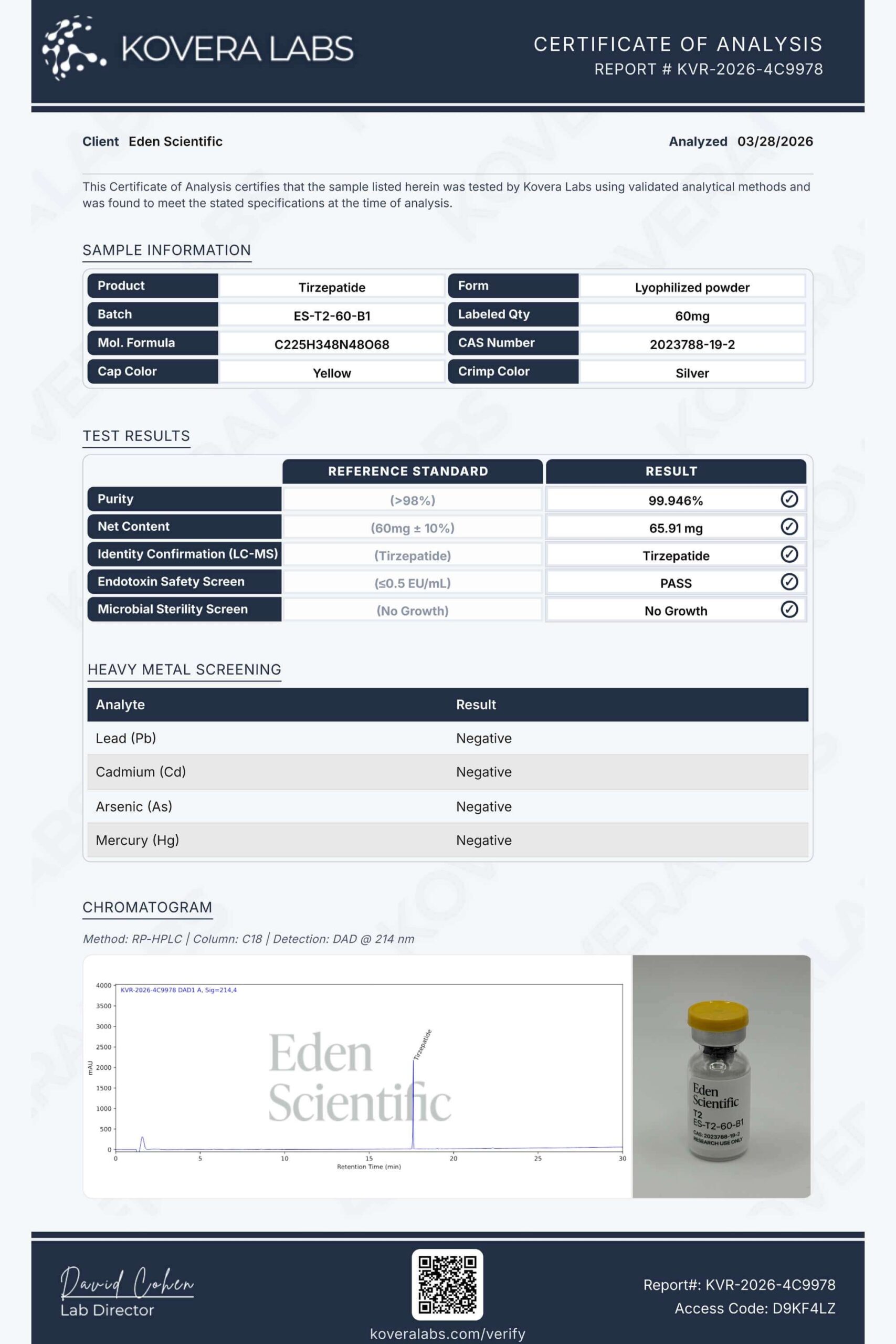
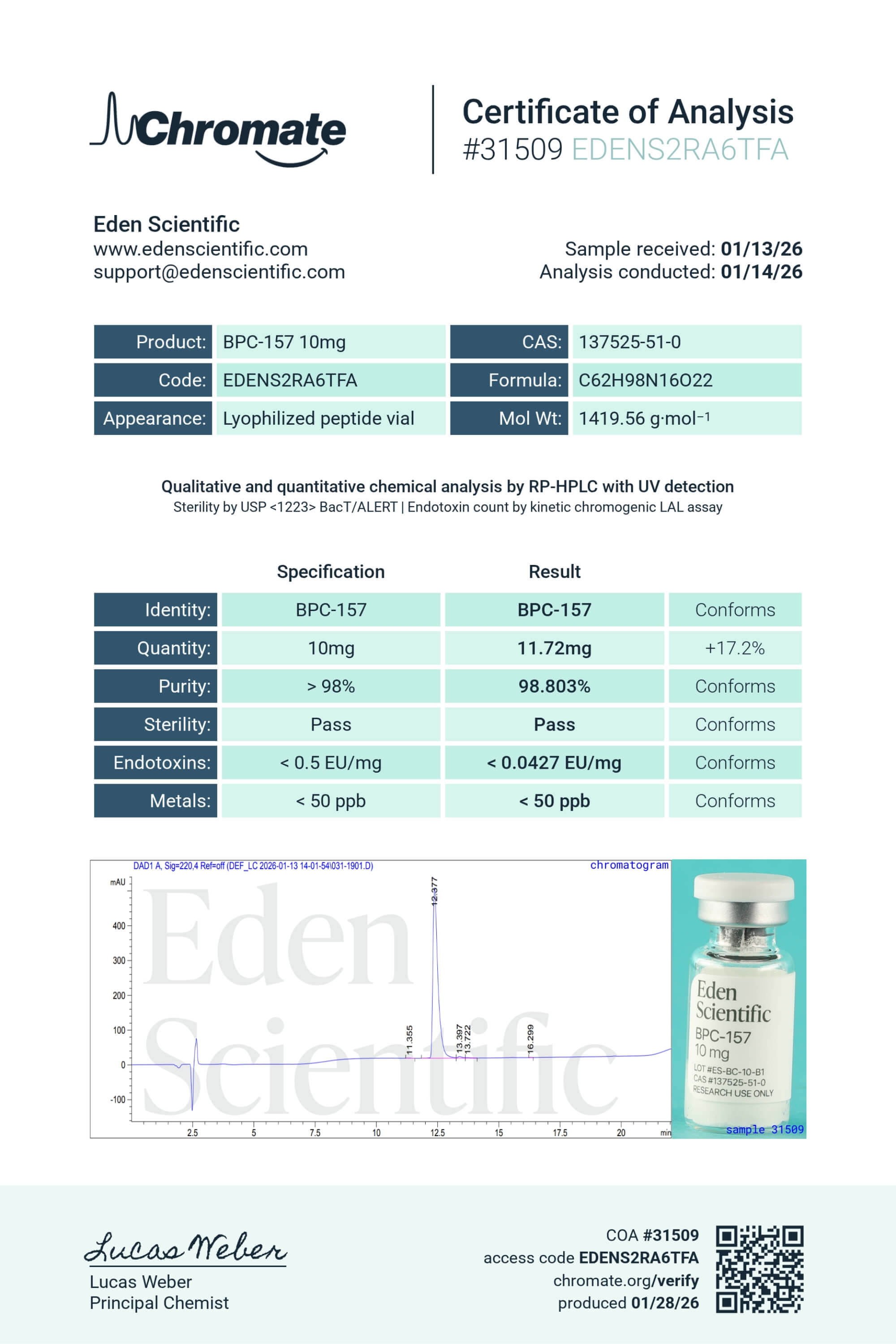
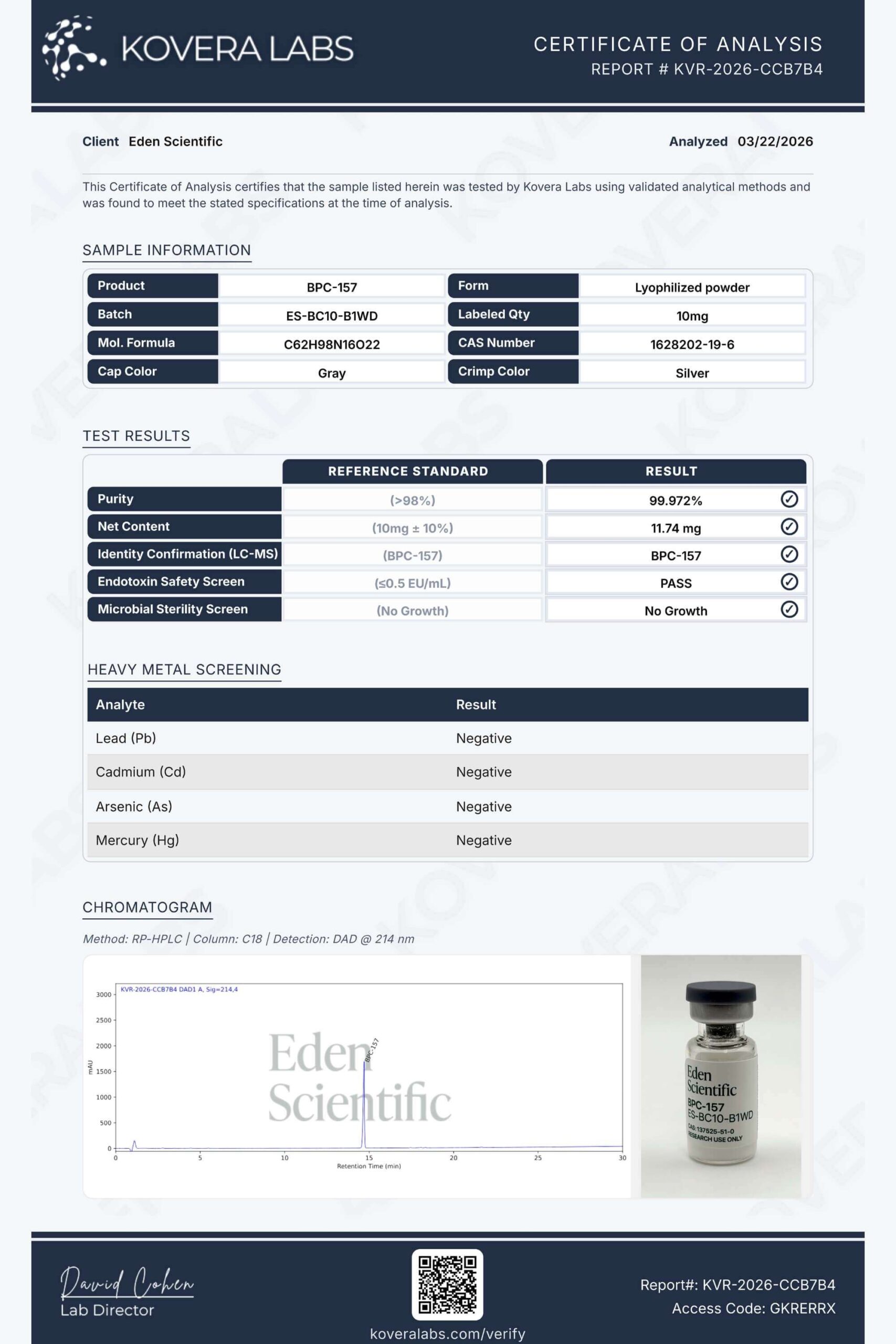
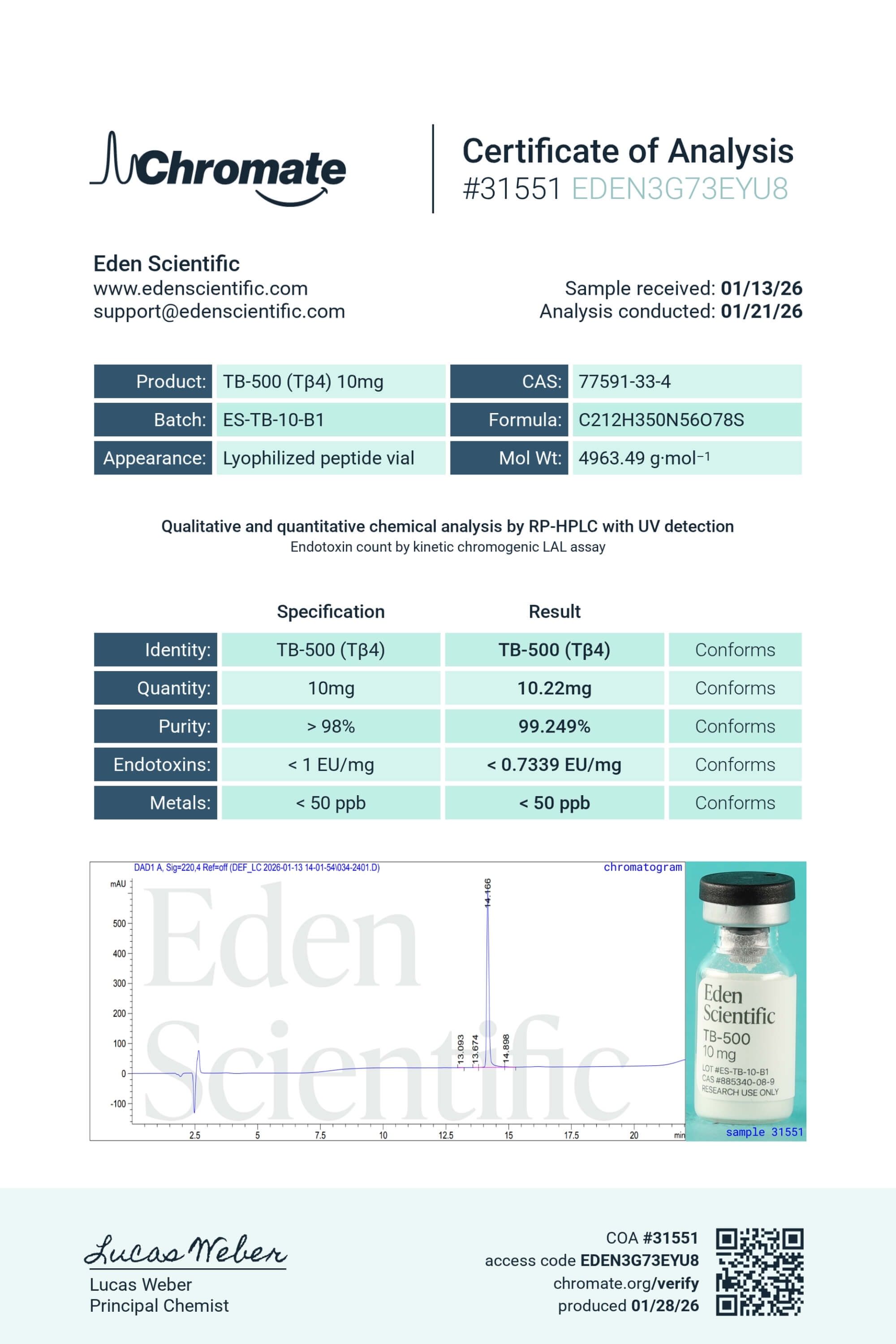
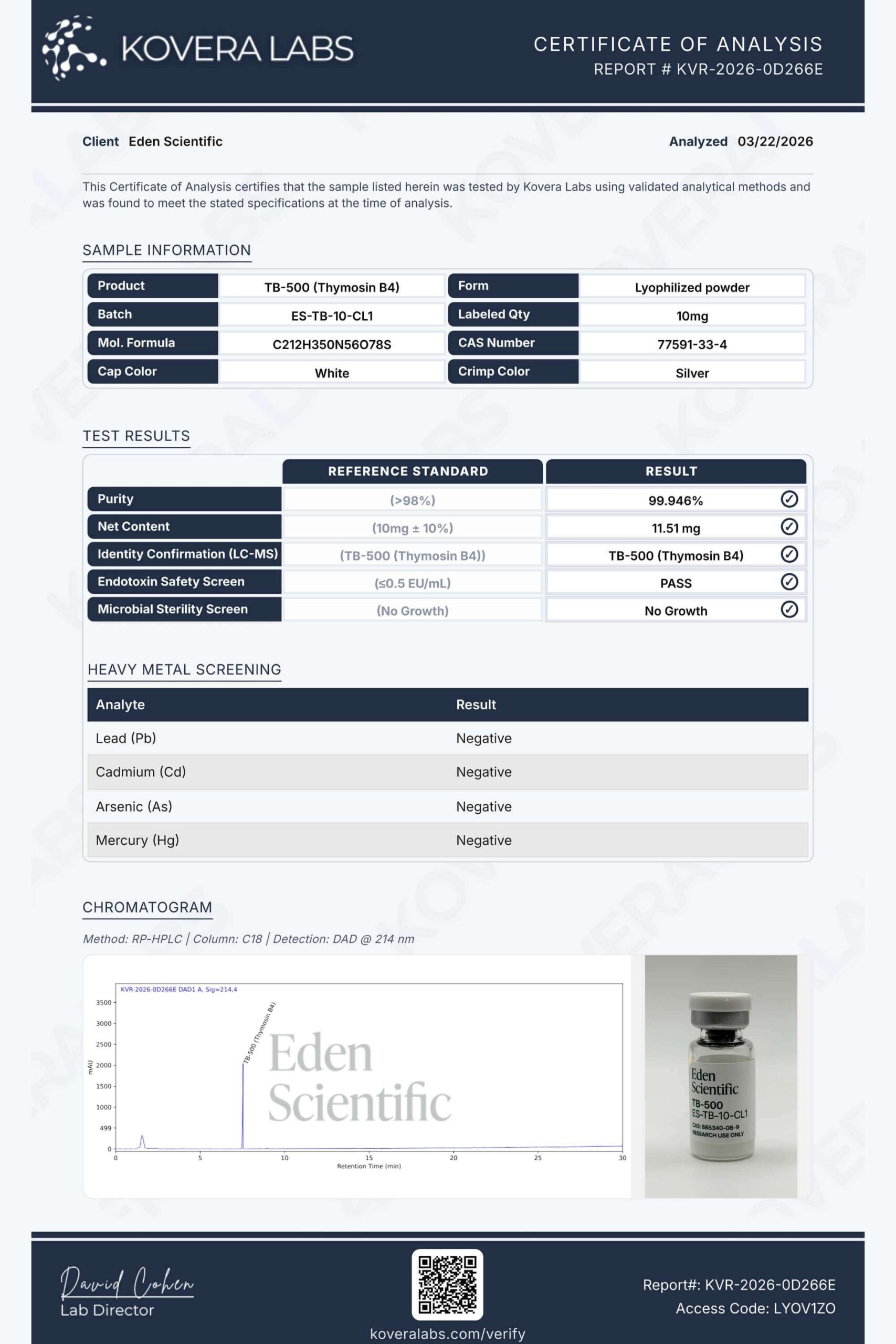
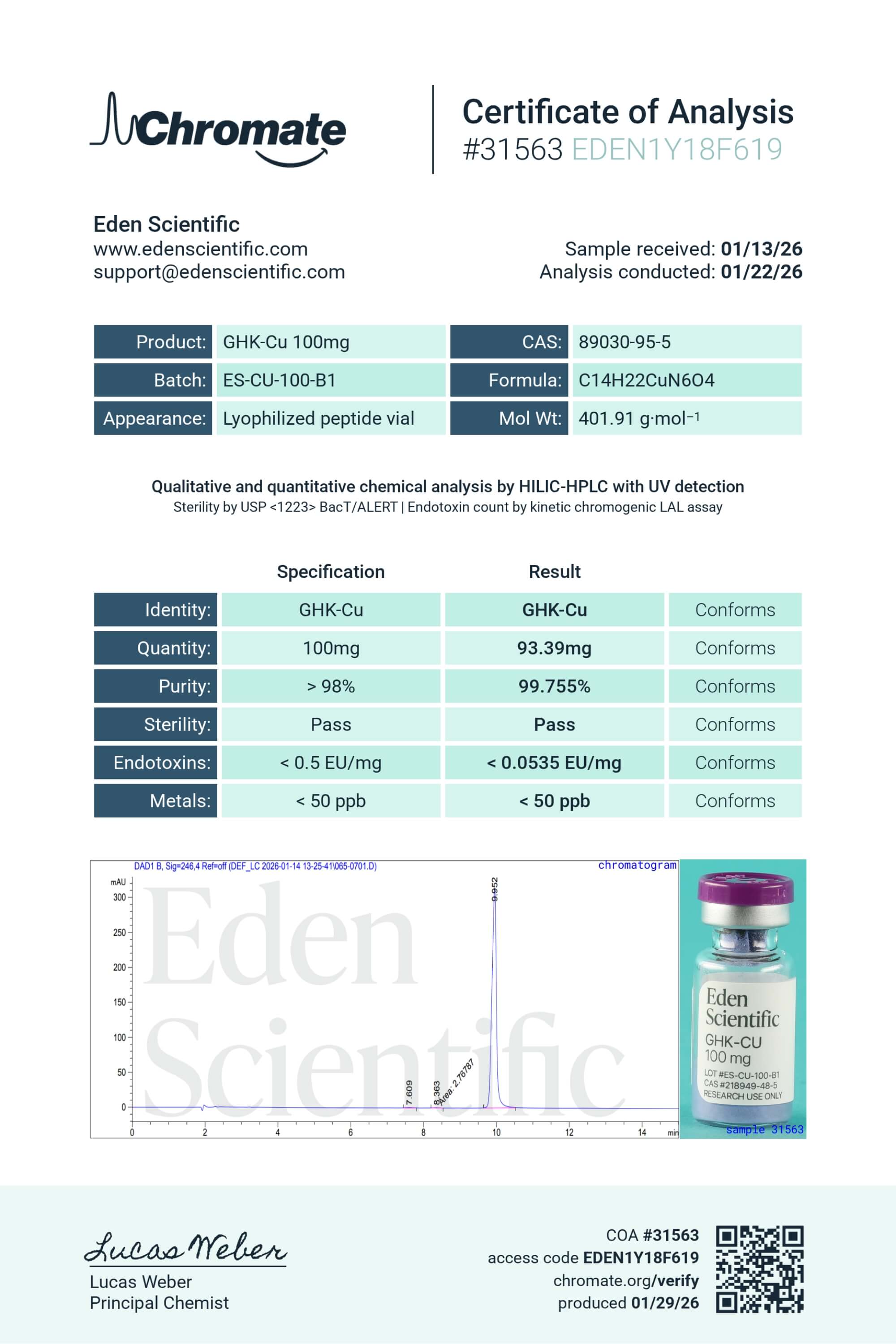
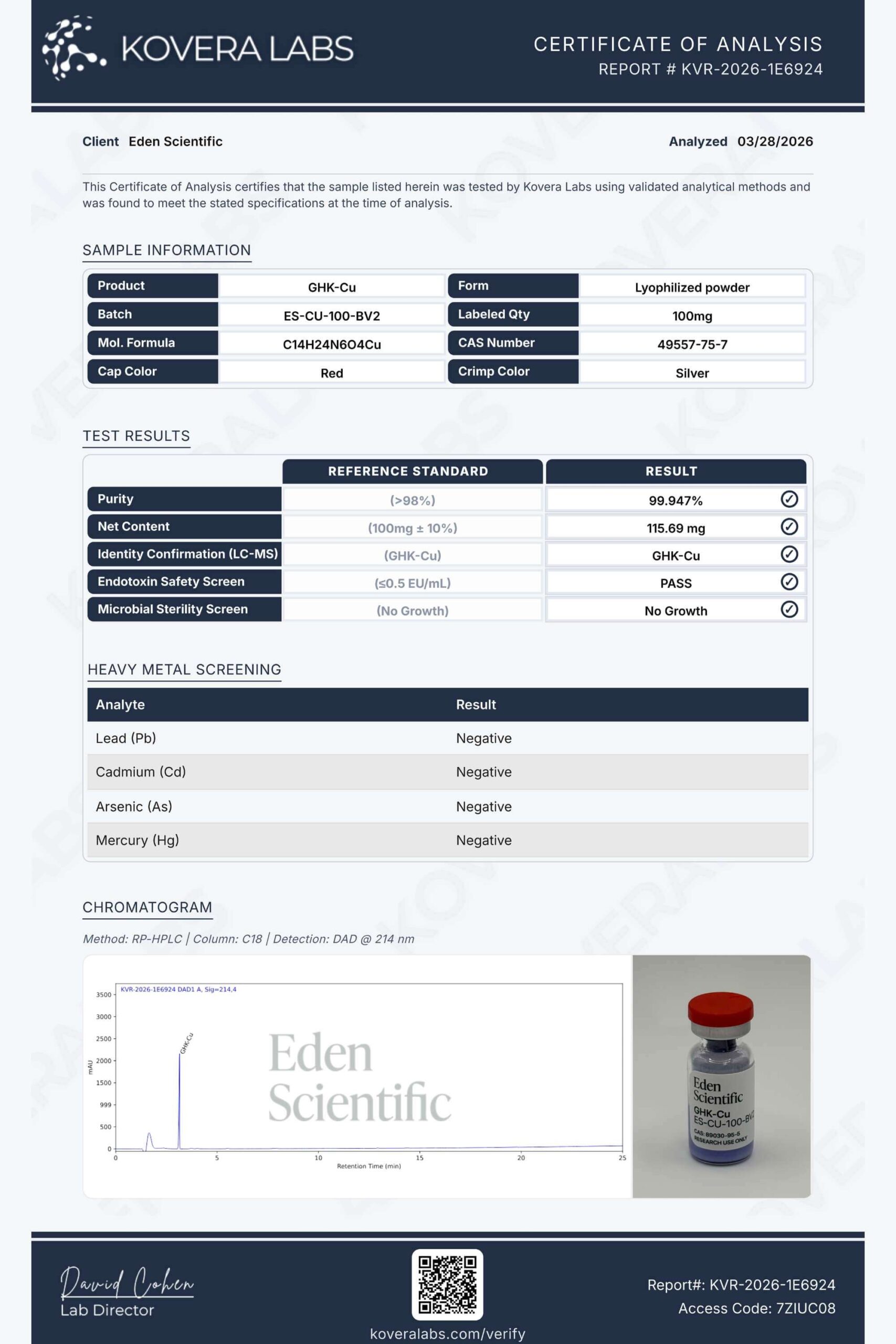
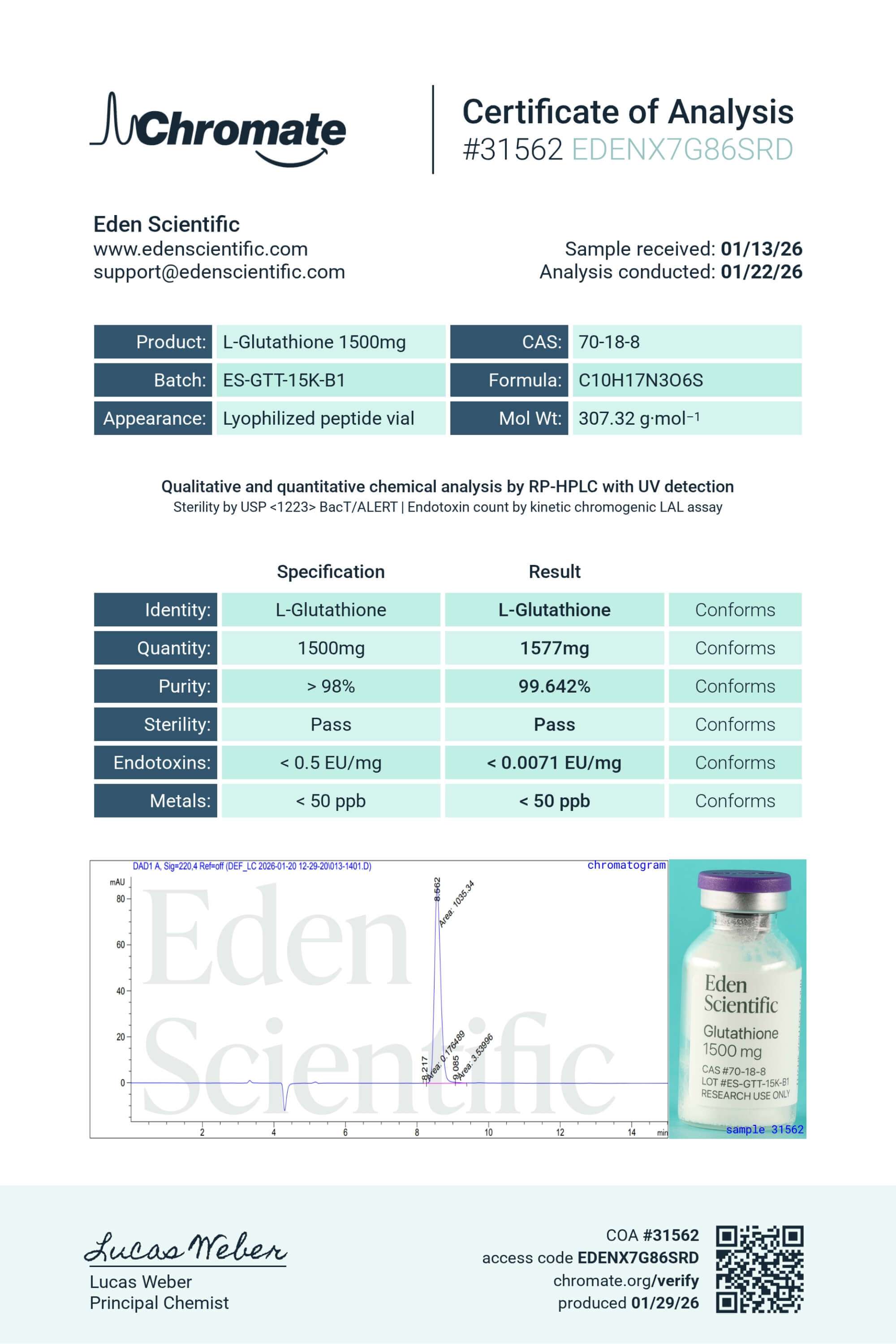
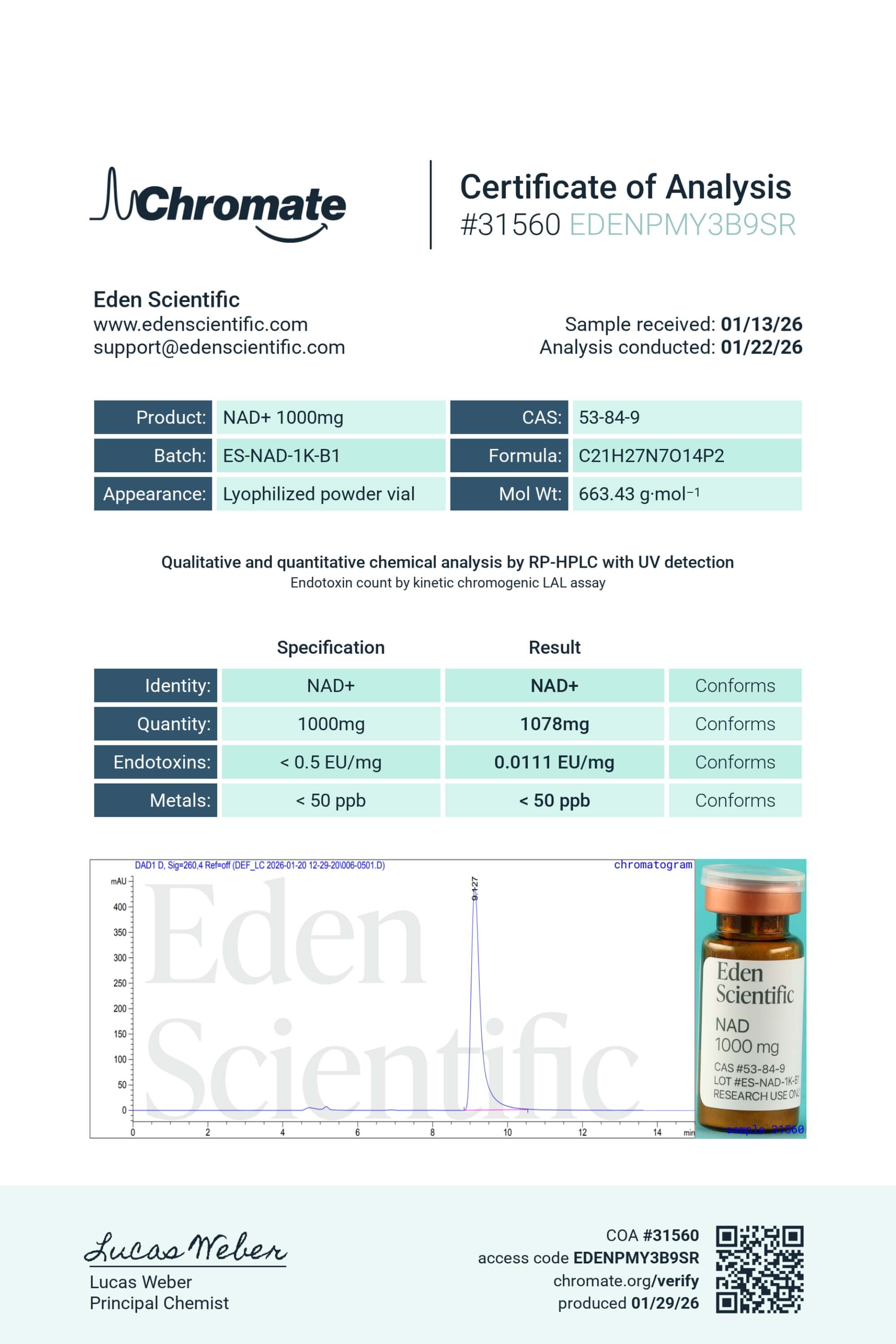
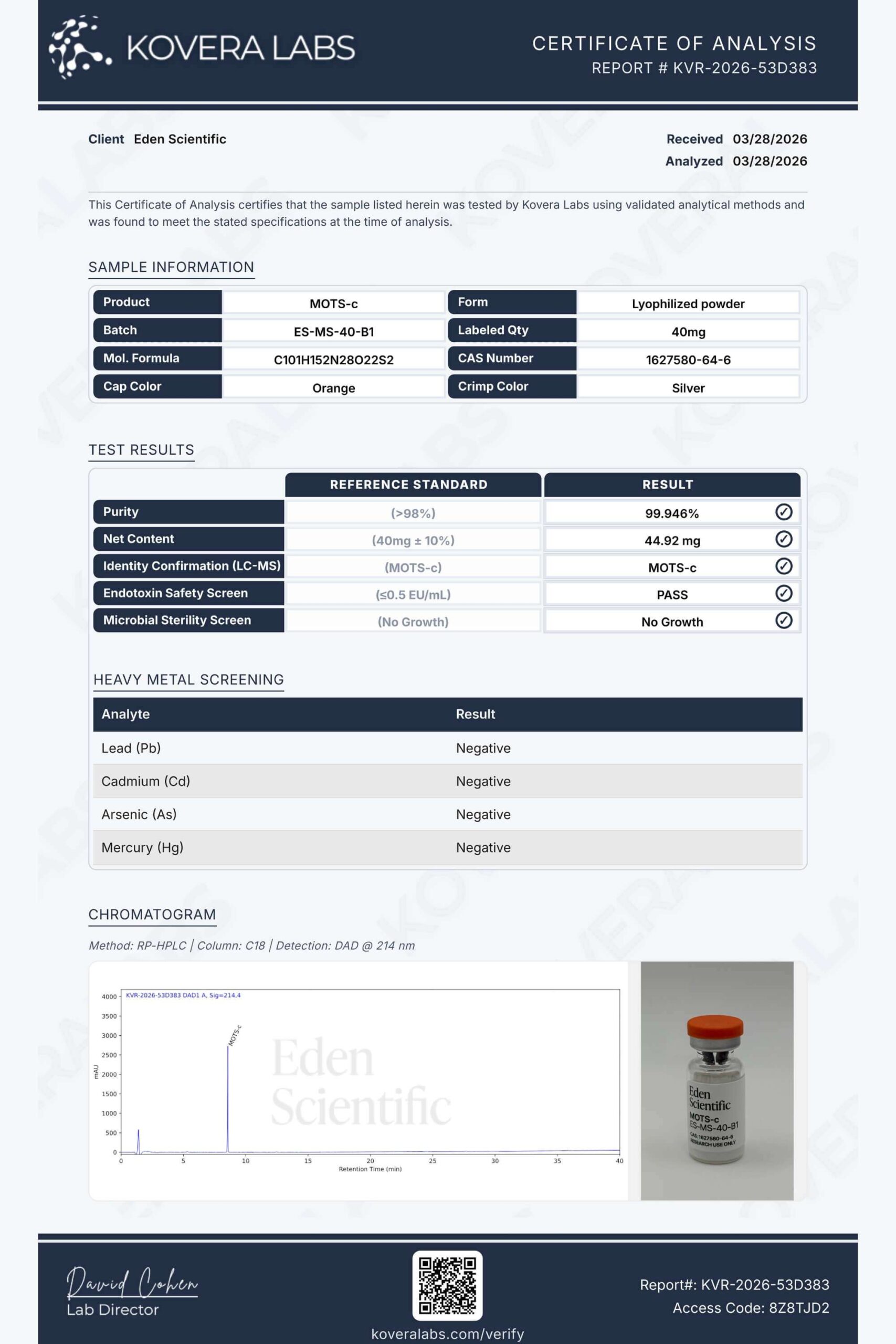
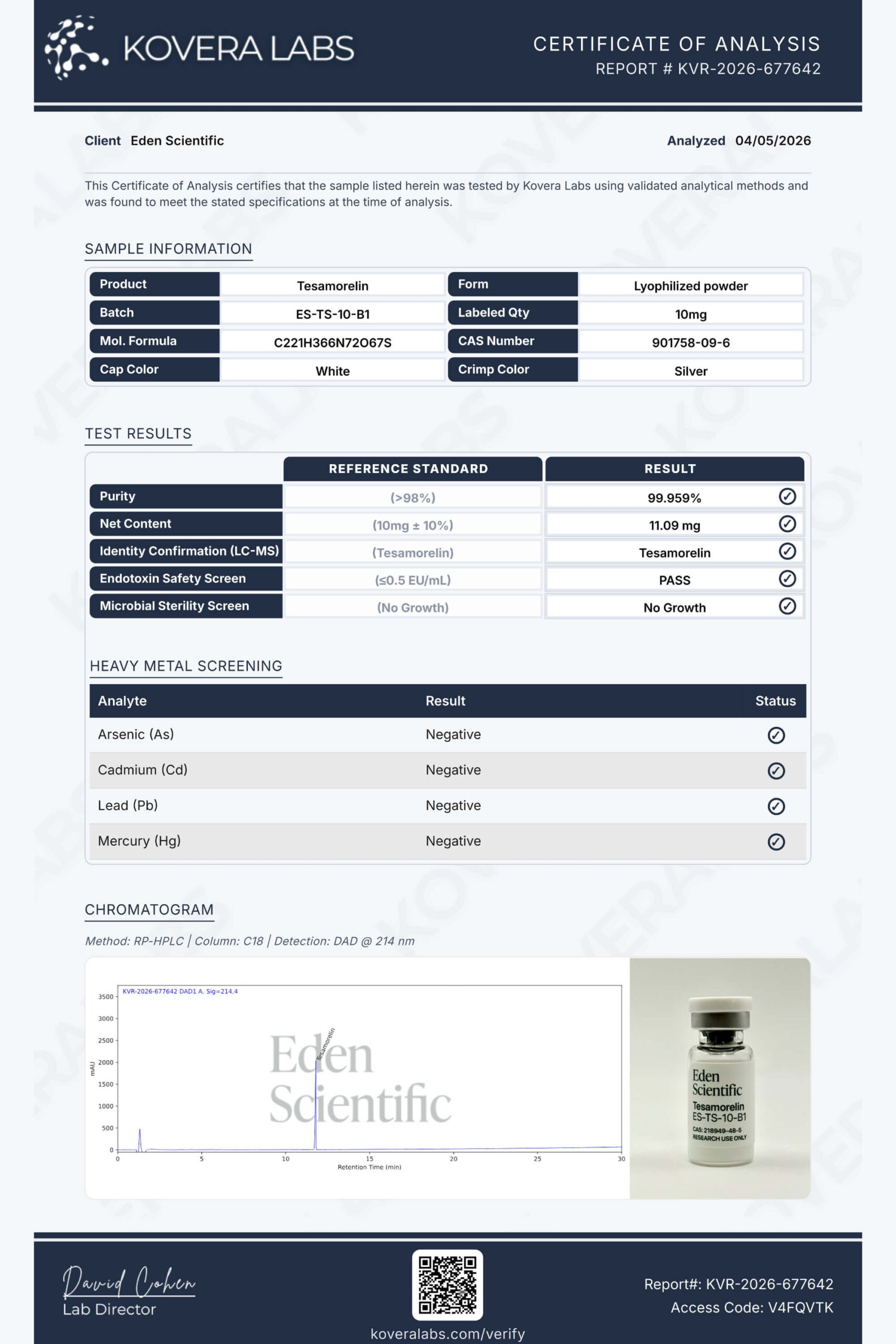
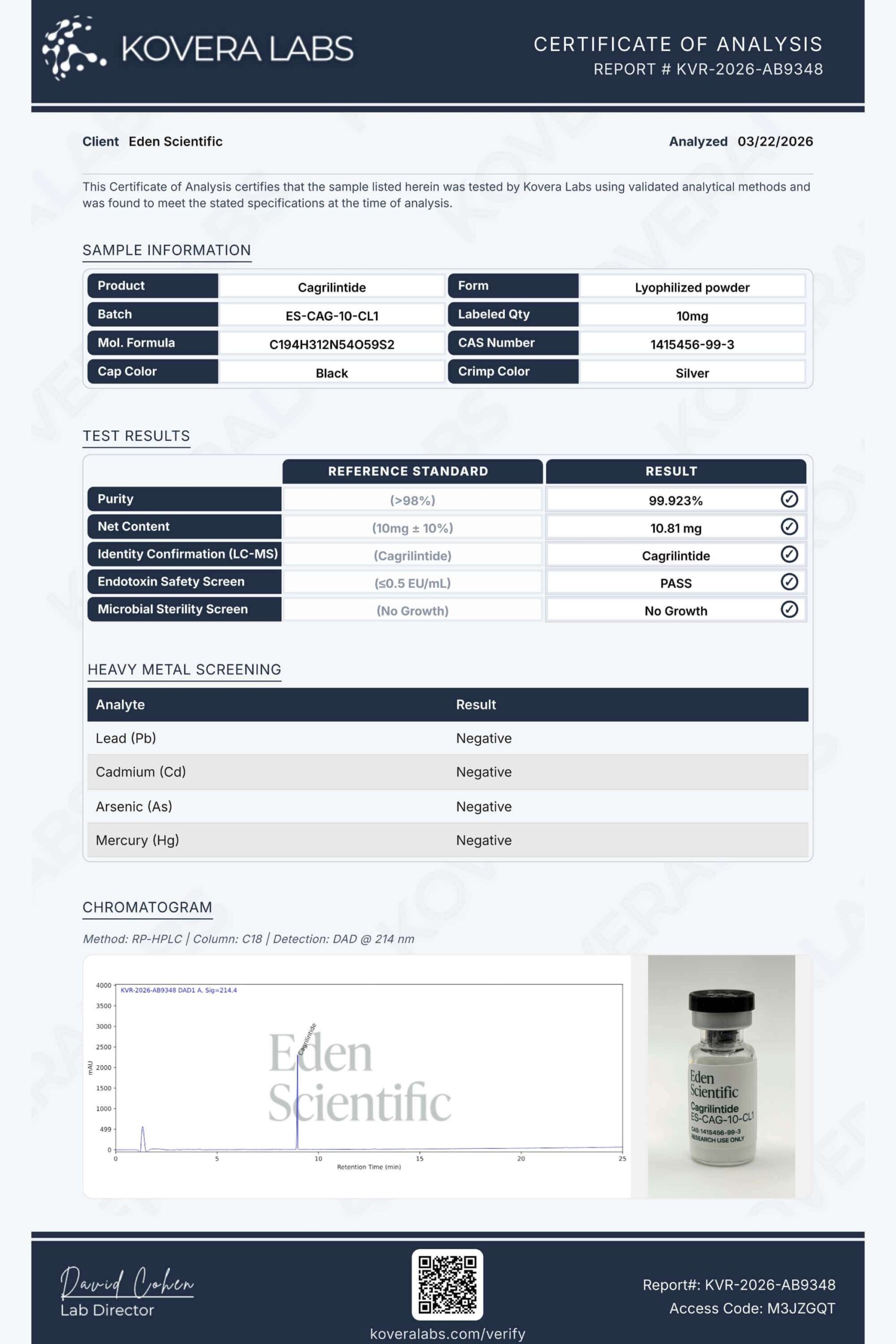
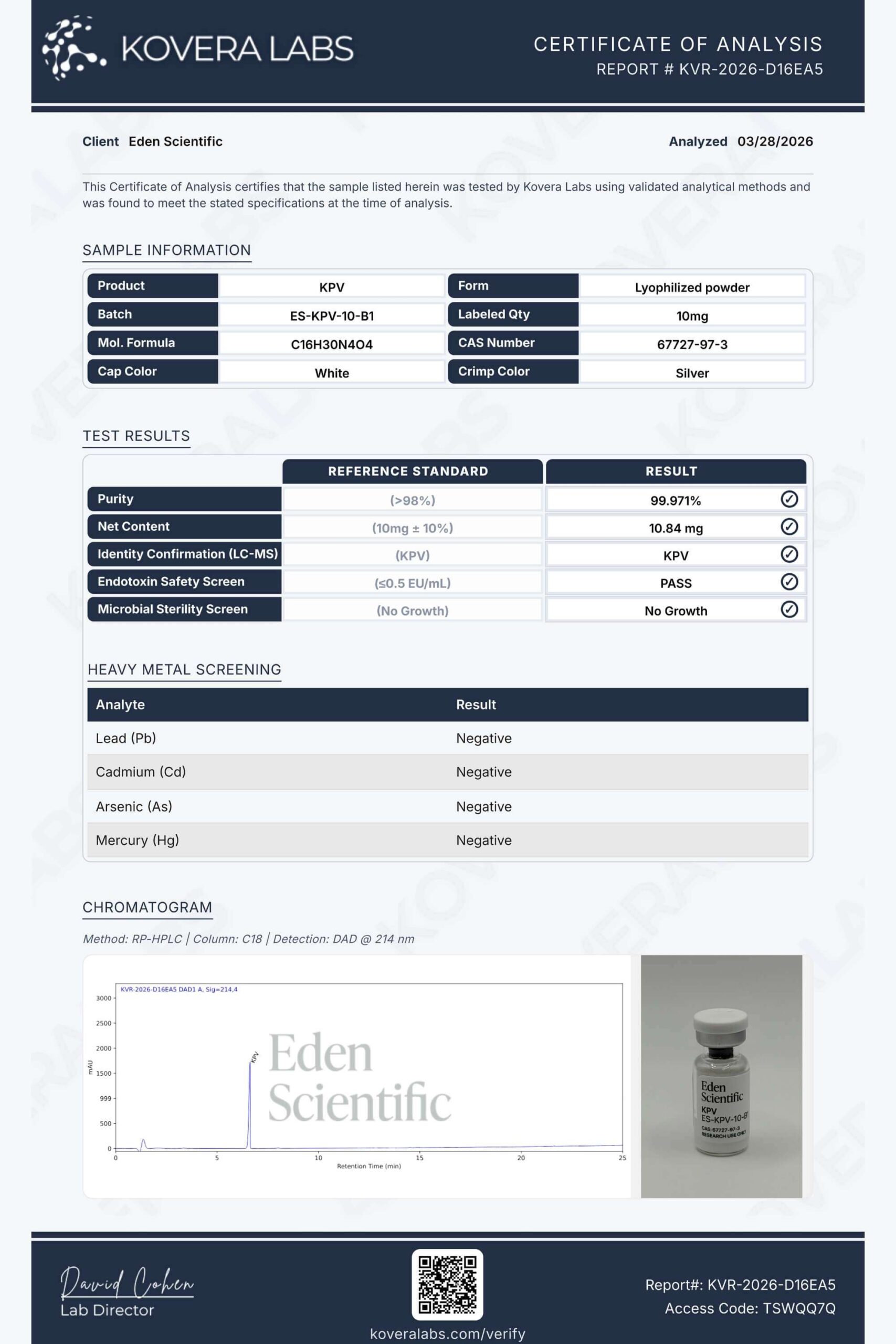
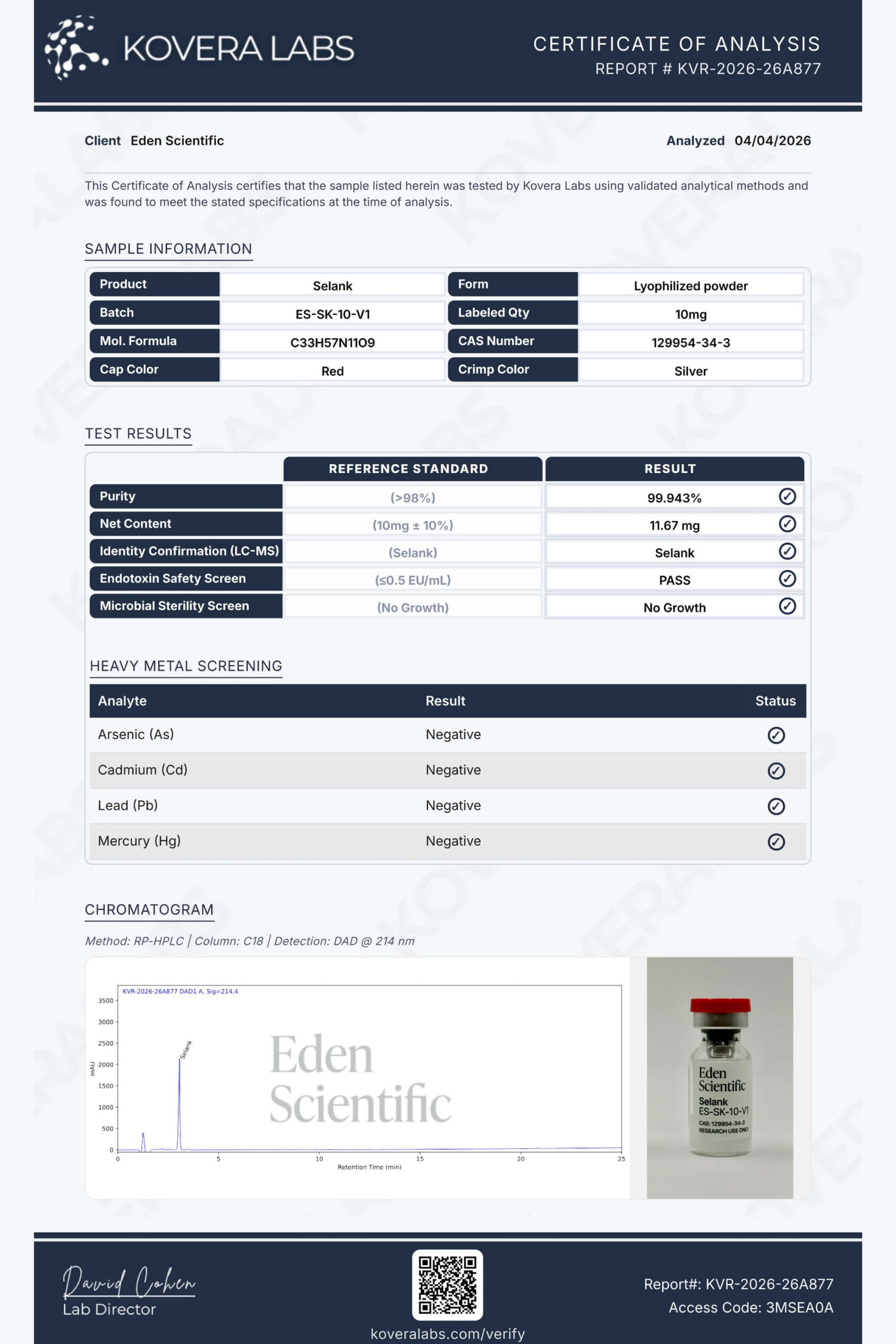
We believe in quality, for you and your research. To us, quality is a system – designed to demonstrate ownership and responsibility of our products.
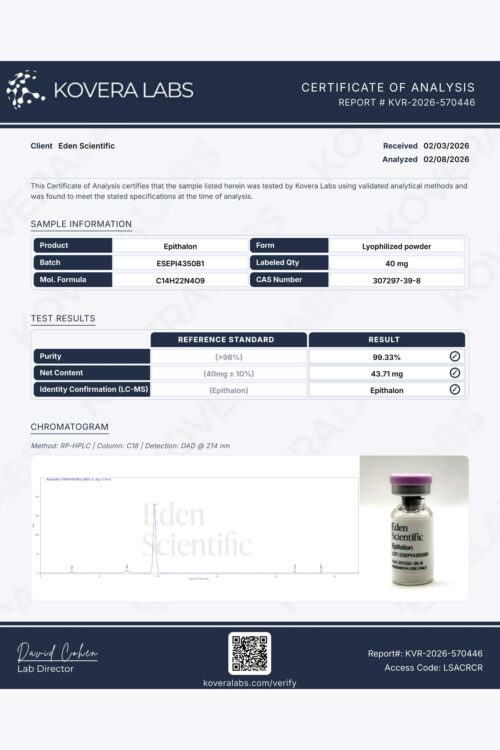
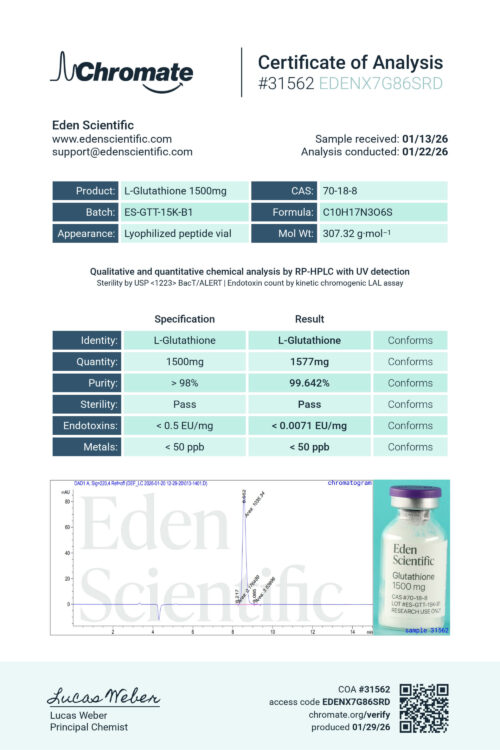
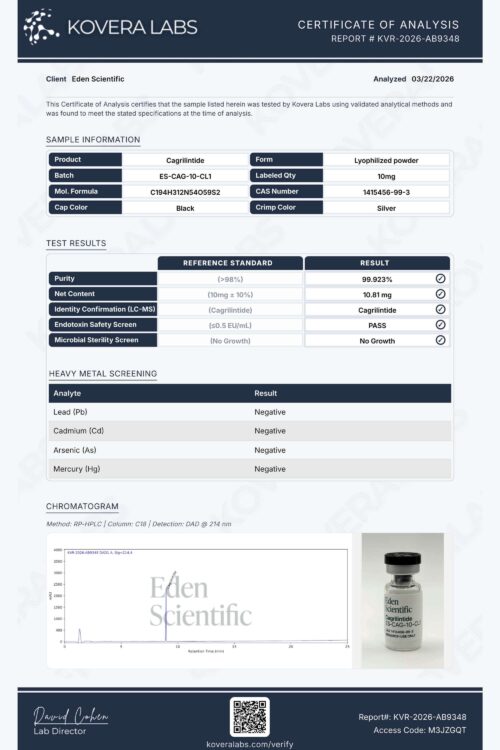
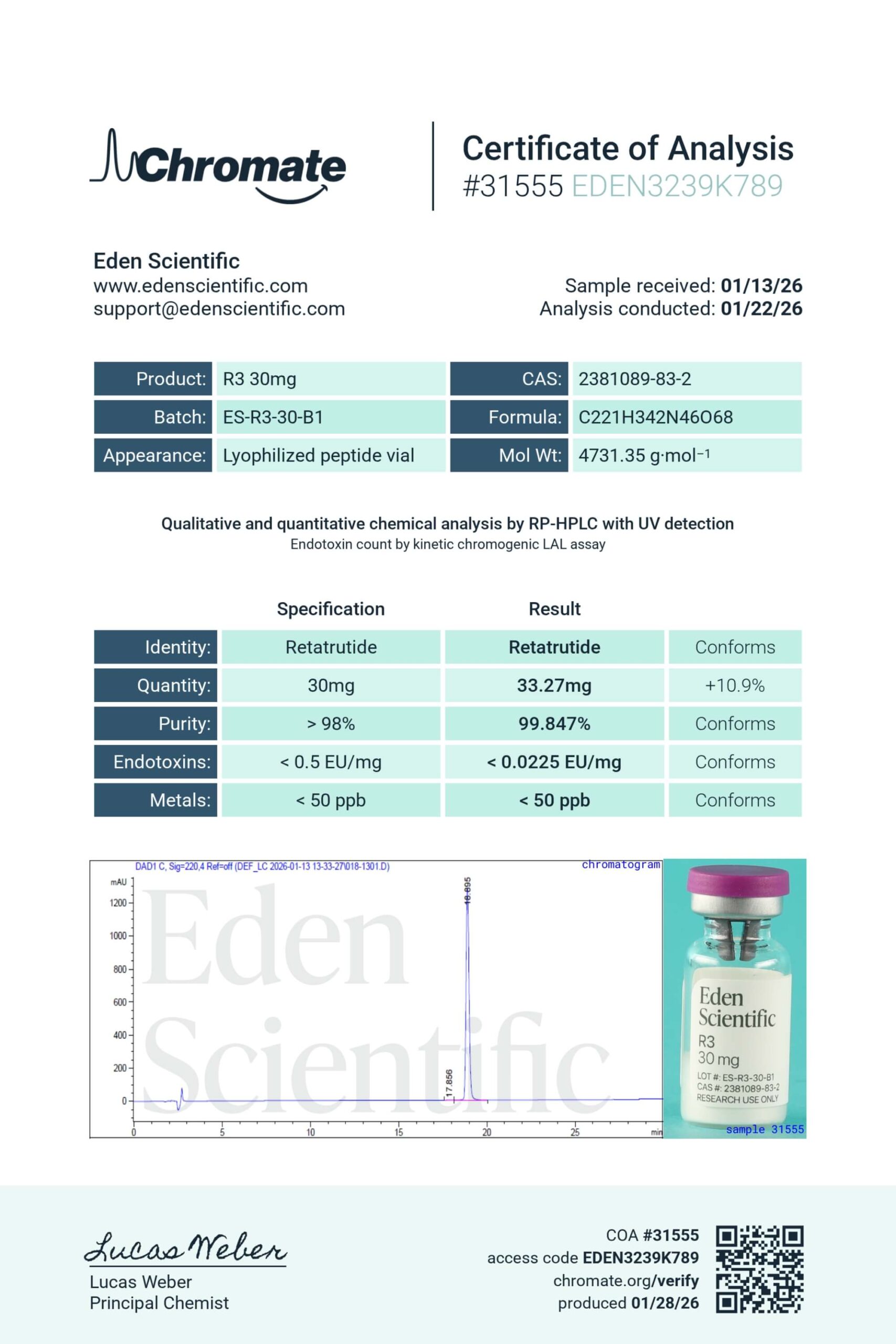
Every Eden product are third-party tested using USP (United States Pharmacopeia) aligned methods by independent laboratories.
Below is how the Eden Standard system works, explained with clarity:
1. Identity Analysis
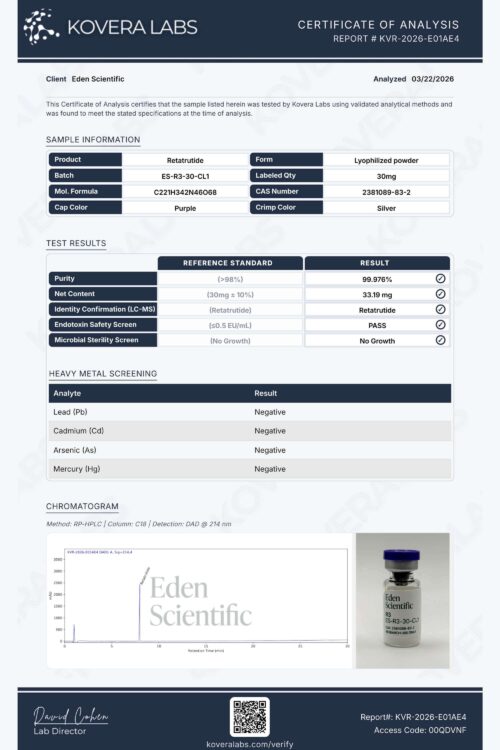
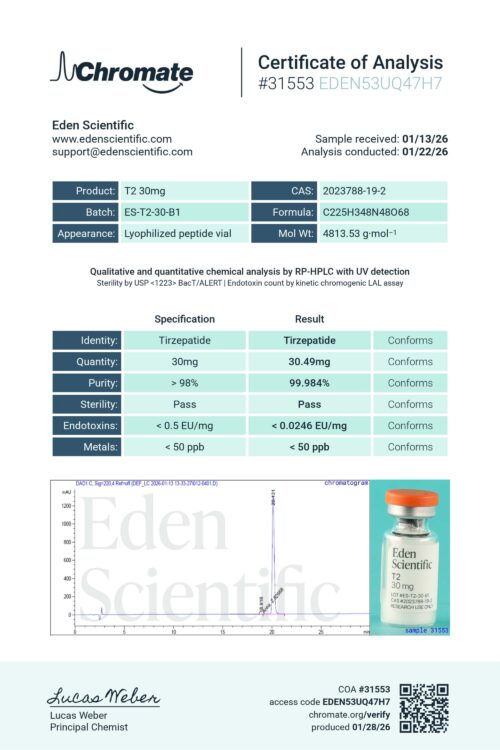
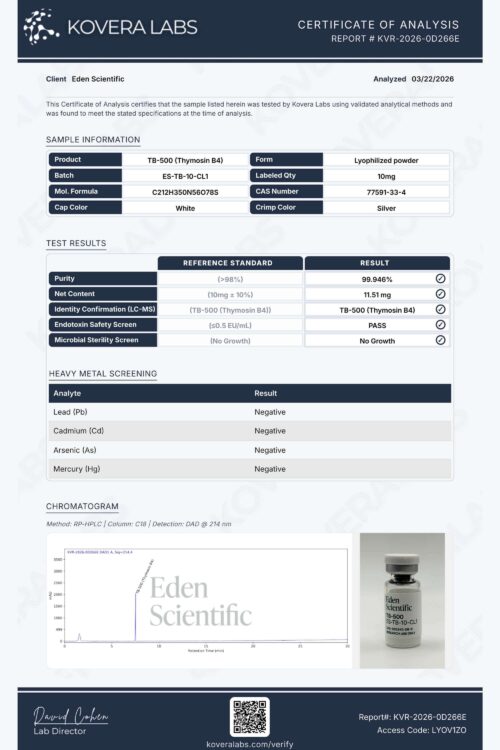
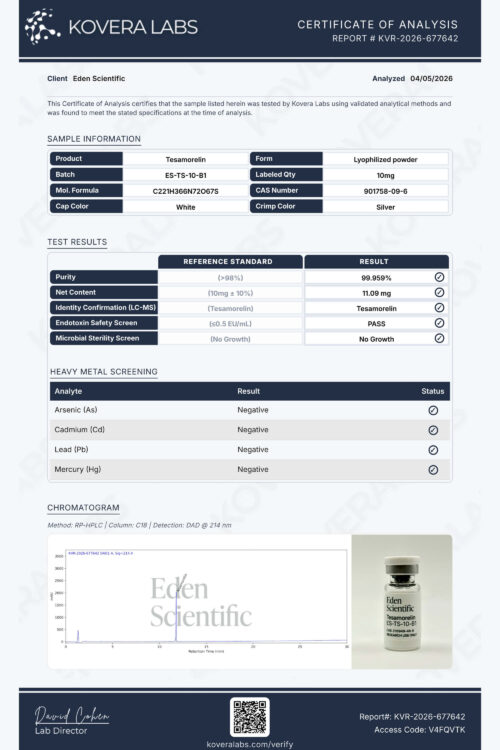
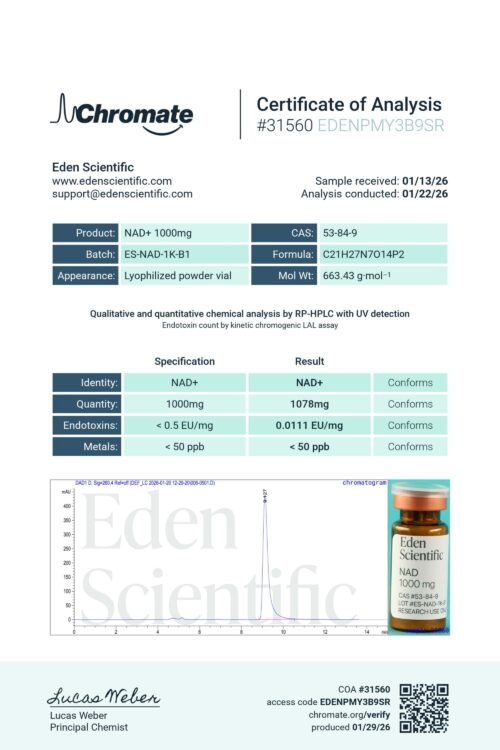
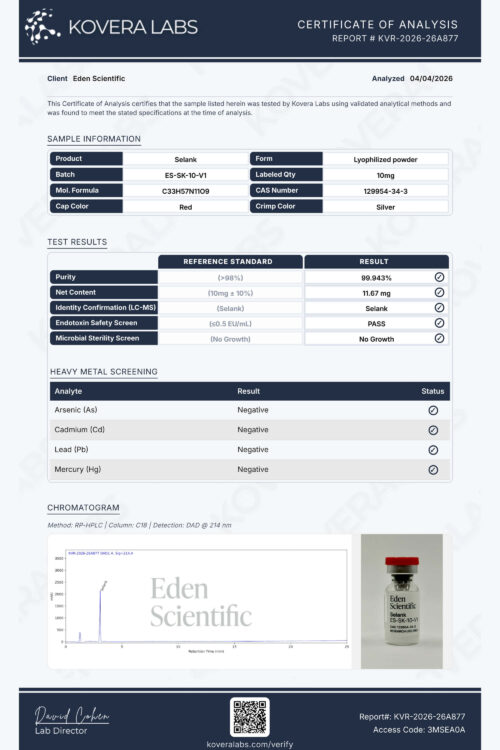
What it means Identification confirms that each compound is exactly what it claims to be.
Why it matters Misidentification is one of the most common causes of downstream variability. If the identity isn’t correct at the start, no amount of work can fix this.
How it’s tested Identity is confirmed using RP-HPLC with UV detection, a precise analytical method that separates and quantifies components to confirm the expected composition.
2. Purity Analysis
What it means Purity analysis measures the purity (how much of the material is the intended compound) expressed as a percentage.
Why it matters Impurity affects consistency, introduces noise, and compromises results.
How it’s tested Purity is confirmed using RP-HPLC with UV detection, a precise analytical method that separates and quantifies components to confirm the expected composition.
3. Net Content Analysis
What it means Net content confirms that the amount provided matches what’s stated on the label.
Why it matters Consistency depends not only on composition, but on quantity. If the stated amount isn’t reliable, results become harder to interpret and replicate.
How it’s tested Net content is confirmed using RP-HPLC with UV detection to verify alignment between labeled amount and actual material.
4. Endotoxin (LPS) Analysis
What it means Endotoxin screening checks for bacterial byproducts (Gram-negative bacteria) such as lipopolysaccharides (LPS) that can remain even when no live microorganisms are present.
Why it matters Endotoxins are invisible and resistant to standard sterilization. If left unchecked, they can cause dangerous outcomes in research applications.
How it’s tested Standard gel-clot Limulus Amebocyte Lysate (LAL) test to detect bacterial endotoxins. Results are reported as pass/fail based on a defined sensitivity threshold.
5. Sterility Analysis
What it means Sterility (bioburden) screening evaluates whether unwanted levels of microorganism growth is present.
Why it matters Microbial contamination introduces variables that can compromise consistency and reliability. Identifying this risk early protects downstream work.
How it’s tested Sterility is tested using membrane filtration and incubation, screening for microbial contamination including bacteria, yeast, and mold. This qualitative test provides a pass/fail result indicating whether detectable microbial growth is present.
6. Heavy Metals Analysis
What it means Heavy metals screening checks for trace elemental contaminants that don’t belong in research materials.
Why it matters Because they aren’t detectable by appearance alone, heavy metals must be actively screened for.
How it’s tested Heavy metals screening is conducted using colorimetric methods, allowing us to detect and assess the presence of unwanted elemental contaminants before release.